Solar Manufacturing Wastewater: Key Treatment Challenges for ETP Design
Explore key challenges in solar manufacturing wastewater treatment, including wastewater characterization, ETP capacity, process-specific contaminants, water reuse and sludge management.
Solar manufacturing plays an important role in the shift towards cleaner energy. But while the end product generates clean power, the manufacturing process can still produce industrial wastewater that needs proper management.
This makes solar manufacturing wastewater treatment an important part of responsible plant operations.
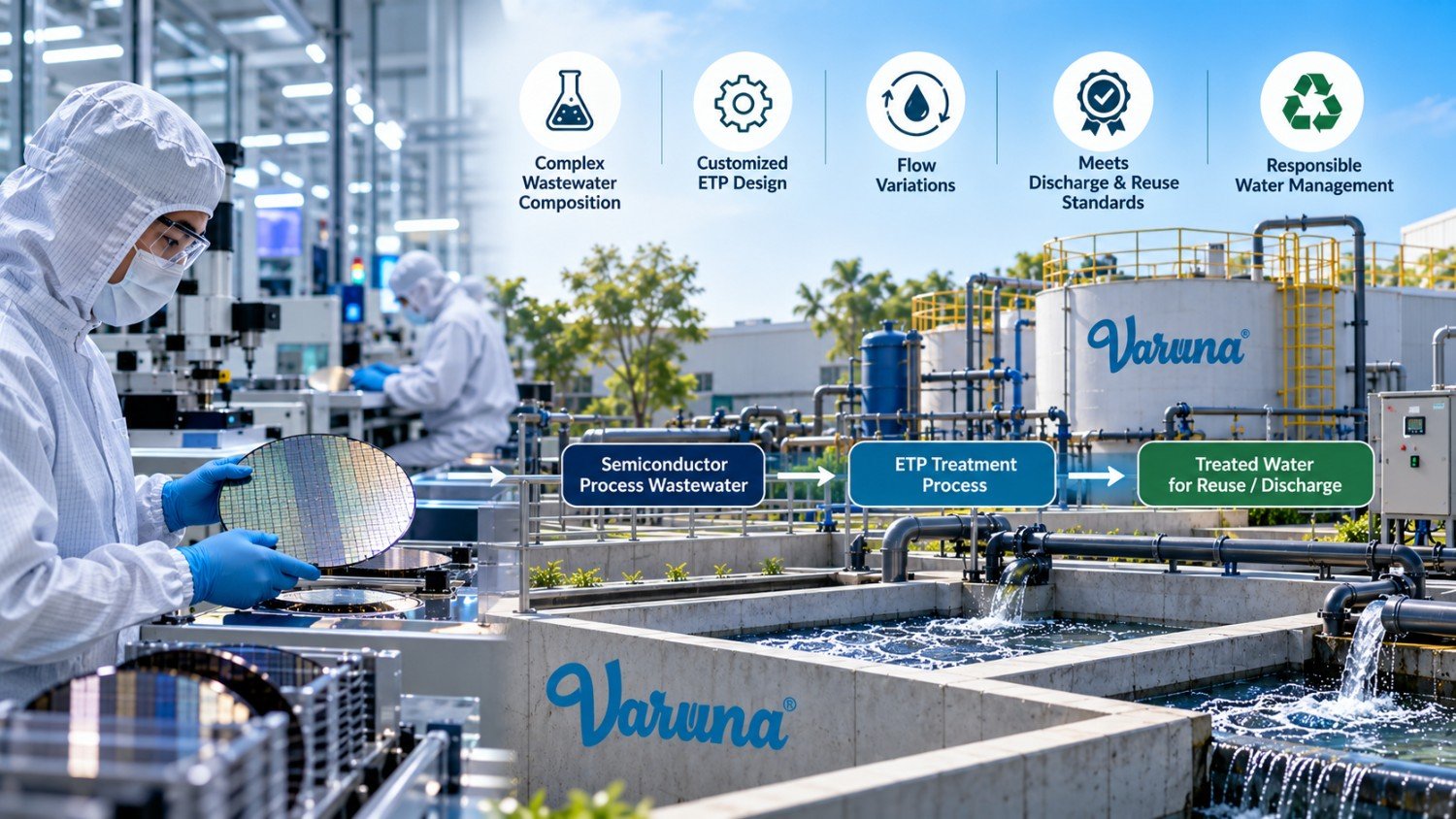
The challenge is that wastewater from solar manufacturing is not necessarily the same from one facility to another. Manufacturing processes, cleaning operations, water consumption and production volumes can all affect the quality and quantity of wastewater.
So, when planning an ETP for solar manufacturing, the focus should not be only on capacity. The treatment system needs to match the actual wastewater being generated.
Where Does Solar Manufacturing Wastewater Come From?
Wastewater can be generated at different points within a manufacturing facility.
Depending on the manufacturing process, sources may include:
- Equipment and process cleaning
- Material or surface cleaning
- Production-related operations
- Chemical processing or handling
- Floor and equipment washing
The wastewater characteristics can change depending on the processes used at the facility.
That is why understanding the source of the wastewater is the first step towards effective solar panel manufacturing wastewater treatment.
Why Is Solar Manufacturing Wastewater Difficult to Treat?
The main challenge is variability.
There is no single wastewater composition that applies to every solar manufacturing unit. A facility's wastewater can depend on its manufacturing process, production scale, chemicals used and cleaning practices.
This creates several factors that need attention during ETP planning.
1. Wastewater Quality Needs to Be Understood First
Before deciding on a treatment process, the wastewater should be properly characterized.
Parameters such as
- pH
- BOD
- COD
- TSS
- TDS
- Oil and grease, where applicable
- Process-specific contaminants
can help establish what the treatment system needs to handle.
For an ETP design for solar manufacturing wastewater, laboratory testing and process information provide a much better basis for design than assumptions.
2. Capacity Alone Does Not Define the Right ETP
Suppose a manufacturing unit generates a specific quantity of wastewater every day.
That number tells you the required flow capacity, but it does not tell you the complete treatment requirement.
Two facilities with similar wastewater volumes may still require different treatment approaches because their wastewater characteristics are different.
This is why solar manufacturing ETP planning needs to consider both wastewater quantity and quality.
3. The Manufacturing Process Influences Treatment
The ETP should be connected to an understanding of the manufacturing process.
Before finalizing the design, it is important to identify:
- Where wastewater is generated
- What processes contribute to the wastewater
- Whether different streams have different characteristics
- How much wastewater is generated
- What quality of treated water is required
This helps create an industrial wastewater treatment for solar industry approach that is based on the actual facility rather than a generic treatment model.
4. Production Growth Should Be Considered
Manufacturing facilities can expand.
An increase in production may change water consumption and wastewater generation. If an ETP is designed only around the plant's current operations, future expansion can put additional pressure on the system.
Therefore, expected production growth should be considered while planning an ETP for solar panel manufacturing industry.
The objective is not necessarily to oversize the plant, but to understand how future operations could affect wastewater generation and treatment requirements.
5. Treated Water Quality Matters
Another important question is what happens after treatment.
If treated wastewater is intended for reuse, the required water quality needs to be defined beforehand.
The treatment system should be designed according to the intended reuse application and the quality required for that application.
This makes water reuse an important consideration when designing a wastewater treatment plant for solar manufacturing.
Planning it early can also help avoid major changes to the treatment system later.
6. Sludge Is Part of the ETP Problem Too
Wastewater treatment does not end with treated water.
Depending on the treatment processes selected, sludge can also be generated. Its collection, handling and disposal need to be considered during the design stage.
A complete solar industry ETP should therefore account for both wastewater treatment and sludge management.
Ignoring this part of the system can create operational challenges after commissioning.
What Should Be Checked Before ETP Design?
Before selecting an ETP technology, the manufacturing unit should gather relevant information about its wastewater.
Key details include:
- Manufacturing process
- Wastewater sources
- Daily wastewater flow
- Peak flow variations
- pH
- BOD
- COD
- TSS
- TDS
- Relevant process-specific contaminants
- Required treated-water quality
- Sludge management requirements
- Future production plans
- Water reuse objectives
This information gives the design team a clear picture of what the ETP actually needs to handle.
Common Mistakes in Solar Manufacturing ETP Design
A few common mistakes can affect ETP performance and operating costs.
Choosing an ETP Only by Capacity
A plant's KLD capacity is important, but flow alone does not determine treatment requirements.
Using a Generic Treatment Process
Industrial wastewater varies from one manufacturing process to another. A standard approach may not always suit the actual effluent.
Skipping Wastewater Characterization
Without proper testing and process information, it becomes difficult to select an appropriate treatment system.
Ignoring Future Production
Changes in production can also change wastewater quantity and characteristics.
Thinking About Reuse Too Late
If treated water is intended for reuse, its required quality should be considered from the beginning.
Why a Customized ETP Approach Works Better
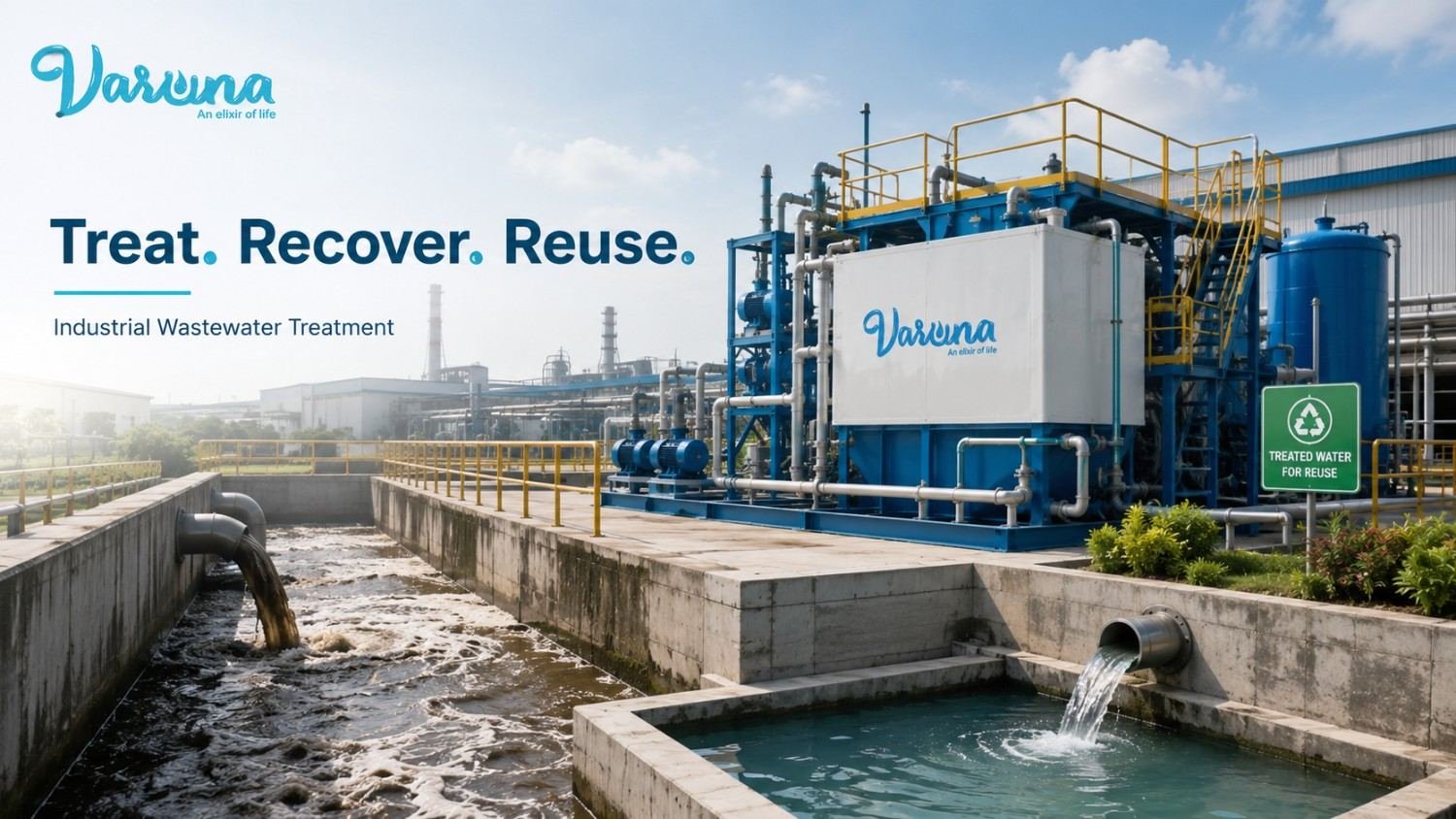
An ETP should treat the wastewater a facility actually generates.
That means the design needs to consider the manufacturing process, wastewater characteristics, flow, treatment objectives, site conditions and future requirements.
Varuna's existing ETP approach follows the same principle: industrial effluent treatment is based on the characteristics of the specific wastewater rather than using one generic system for every industry.
The information required for ETP planning includes process details, wastewater sources, flow, pH, BOD, COD, TSS, TDS, oil and grease, relevant chemicals, and the desired treated-water quality.
Conclusion
Solar manufacturing may support the transition to cleaner energy, but the wastewater generated during manufacturing still needs careful treatment.
Effective solar manufacturing wastewater treatment starts before the ETP is installed.
Understand the manufacturing process. Characterize the wastewater. Assess the flow. Define the treatment objective. Then select and design the ETP accordingly.
For solar manufacturing facilities, a properly planned ETP can help turn wastewater management from an operational challenge into a structured part of responsible plant management.