RCC Tanks for Rainwater Harvesting: Key Design and Storage Considerations
Learn the key design and storage considerations for RCC tanks for rainwater harvesting, including capacity, installation, structural strength, leakage protection, and system integration.
Rainwater harvesting is often discussed as a way to collect and conserve water. But collecting rain is only one part of the system.
The next question is, where will you store it?
A well-planned storage tank can make a major difference to how effectively a rainwater harvesting system works. For homes, apartments, institutions, and larger properties, RCC tanks for rainwater harvesting can provide a strong and dependable storage option.
But choosing the right tank is not simply about picking a size. Capacity, location, structural strength, water flow and installation requirements all need to be considered.
Why the Storage Tank Matters in Rainwater Harvesting
A rainwater harvesting system collects water from rooftops or other suitable surfaces and directs it towards a storage or recharge system.
When the collected water is intended for storage, the tank becomes an important part of the overall setup.
A poorly selected tank can lead to problems such as leakage, insufficient storage capacity or difficulty integrating the tank with the existing rainwater harvesting system.
That is why the rainwater harvesting RCC tank should be planned along with the collection system rather than treated as a separate decision.
1. Start With the Required Storage Capacity
One of the first things to determine is how much rainwater needs to be stored.
The required capacity depends on factors such as
- Available roof or collection area
- Local rainfall pattern
- Expected water demand
- Frequency of rainfall
- Available space for installation
- Intended use of the harvested water
Choosing a tank that is too small may result in excess water being lost during heavy rainfall. On the other hand, unnecessarily large storage can increase project costs and require more installation space.
The right RCC tank capacity for rainwater harvesting should therefore be decided based on the actual requirements of the site.
2. Consider Where the Tank Will Be Installed
The location of the tank can influence both design and installation.
Depending on the property and available space, an RCC water tank can be planned for underground or above-ground installation.
Underground storage can be useful where surface space is limited. It can also keep the storage infrastructure out of the way of regular property use.
The tank location should also allow practical access for inspection, maintenance, and connection to the rainwater collection pipeline.
3. Structural Strength Should Not Be Overlooked
Rainwater storage involves more than simply holding water.
The tank needs to withstand the loads and conditions associated with its installation. This becomes particularly important for larger storage requirements and underground applications.
RCC construction is known for its structural stability and can be suitable for demanding water-storage applications.
For a precast RCC water tank, the construction method, installation conditions, and site requirements should all be considered before final selection.
4. Leakage Protection Is Critical
The purpose of rainwater harvesting is to conserve water. Leakage defeats that purpose.
A storage tank should therefore be designed and installed with proper attention to water containment.
This is especially important for underground tanks, where identifying and repairing leakage can be more difficult after installation.
Choosing a reliable RCC rainwater storage tank and ensuring proper installation can help reduce unnecessary water loss and maintenance issues.
5. Think About Installation and Future Requirements
A tank should not only work for today's requirement. It should also make sense for the property's future needs.
For developing properties, residential communities or larger projects, storage requirements may increase over time.
Precast RCC solutions can offer practical installation advantages. Varuna's precast RCC tanks are available in customizable sizes from 10,000 to 200,000 litres, according to the shared product information.
Planning for future expansion can help avoid replacing the entire storage system later.
6. Integrate the Tank With the Complete System
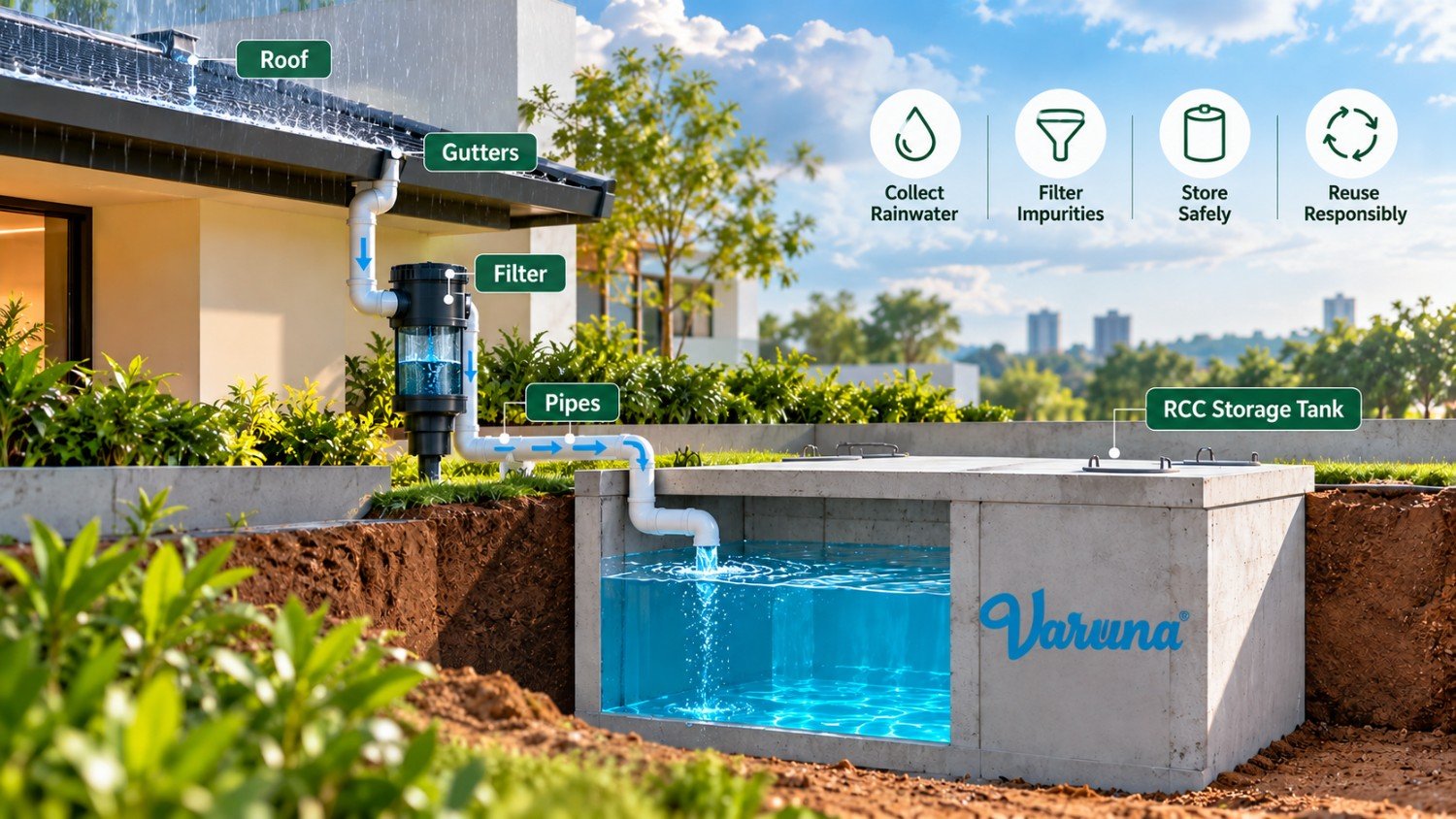
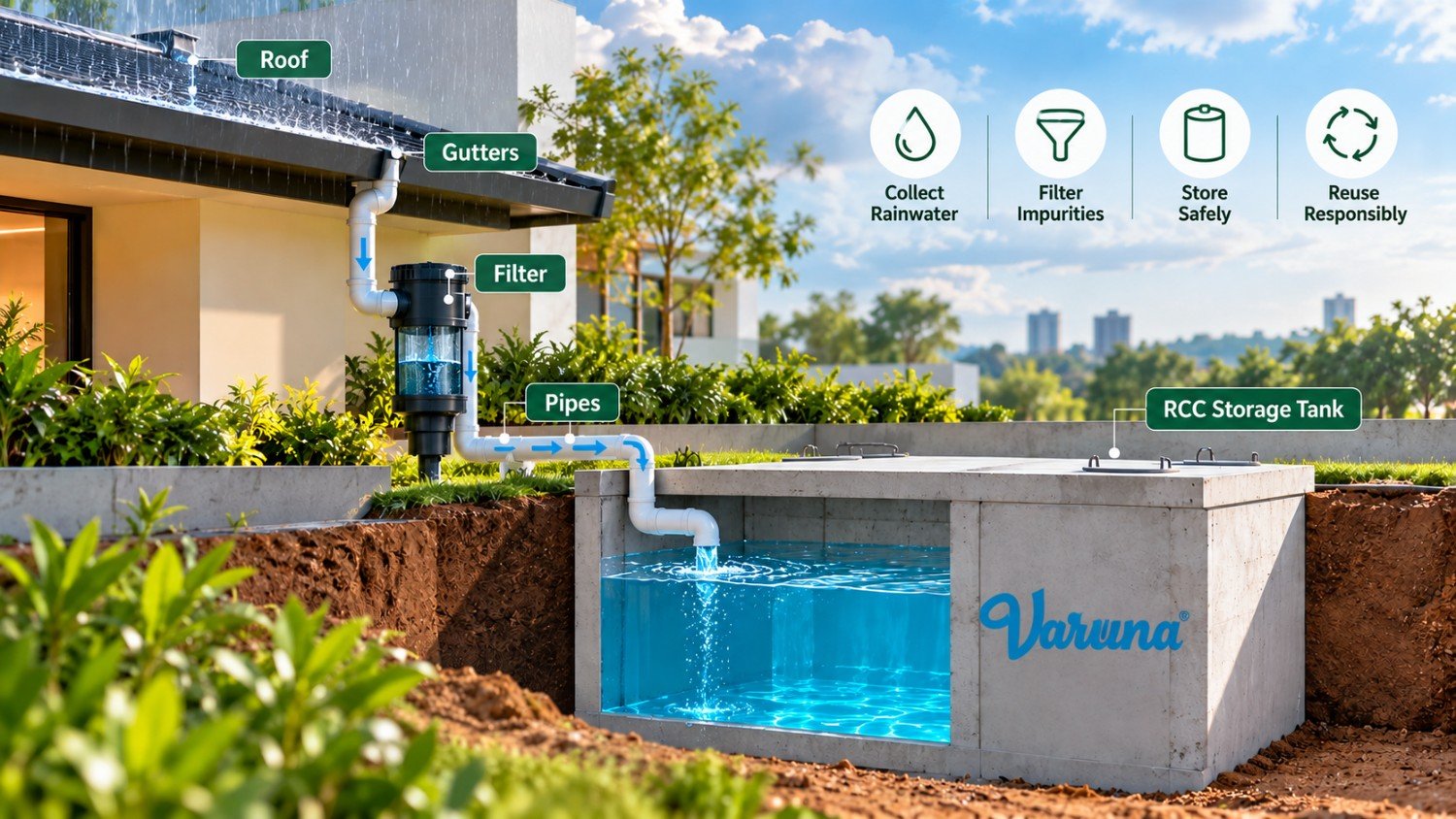
A tank works best when it is planned as part of the complete rainwater harvesting setup.
The system may include:
Roof → Gutters → Filters → Pipes → Storage Tank → Reuse
The tank should therefore have suitable connections for incoming rainwater, overflow, and the intended water-use system.
RCC tanks can also be integrated with broader water-management systems. The shared Varuna material specifically identifies rainwater harvesting, greywater recycling, STP integration, and water-level monitoring as applications that can work alongside RCC tanks.
Why Consider Precast RCC Tanks?
For projects requiring durable and long-term water storage, precast RCC tanks for rainwater harvesting can be a practical option.
Compared with lightweight storage solutions, RCC tanks offer structural stability and can be used for both underground and above-ground applications. The shared Varuna material also highlights zero-joint construction, customizable sizes, and installation without additional plastering or waterproofing as features of its precast RCC tank approach.
The right choice, however, still depends on the project's storage requirement, site conditions, and installation plan.
Choosing the Right RCC Tank for Rainwater Harvesting
Before selecting a rainwater storage tank, ask a few basic questions:
- How much rainwater can the site collect?
- How much water needs to be stored?
- Is underground or above-ground storage more suitable?
- What space is available?
- What will the harvested water be used for?
- What are the installation and maintenance requirements?
- Will storage requirements increase in the future?
Answering these questions makes it easier to select a tank that fits the actual project rather than choosing one based only on capacity.
Conclusion
Rainwater harvesting does not end when rainwater is collected. Effective storage is equally important.
The right RCC tanks for rainwater harvesting can provide a durable storage solution when the tank capacity, location, construction, and system connections are planned properly.
For any project, the goal should be simple: collect more rainwater, store it safely and make the stored water useful for the property.
A well-planned storage system can turn rainwater harvesting from a one-time installation into a practical part of long-term water management.