Plastic Water Tank vs RCC Water Tank: Which Is Better for Water Storage?
Planning to install a water tank? Compare plastic and RCC water tanks based on cost, durability, installation, maintenance and capacity before making a choice.
Introduction
Most homes have a plastic water tank on the terrace, while apartments, factories and commercial buildings often rely on large underground concrete tanks. The reason is simple: their water storage needs are different.
So, when choosing a plastic water tank vs RCC water tank, the decision goes beyond price. Factors like capacity, location, installation and durability also matter.
Let's compare the two and understand which option works best for different needs.
What Exactly Is a Plastic Water Tank?
Plastic water tanks are a common choice for homes, and it's easy to see why. They're easy to find, come in different sizes and colours, and don't need much work before installation.
Most are made from polyethylene using a process called rotational moulding. If you plan to store drinking water, look for a food-grade plastic water tank. In India, IS 12701 is the official Indian Standard specification for rotationally moulded polyethylene water storage tanks used for storing drinking water.
Another reason people prefer them is convenience. For an independent house, you can simply choose the required water tank capacity, prepare a level base and connect the plumbing. There's no need for separate construction.
You'll usually find household tanks starting at around 500 litres, with larger options available for homes with higher water storage needs.
What About RCC Water Tanks?
RCC stands for Reinforced Cement Concrete. They're made from cement, steel reinforcement and aggregate.
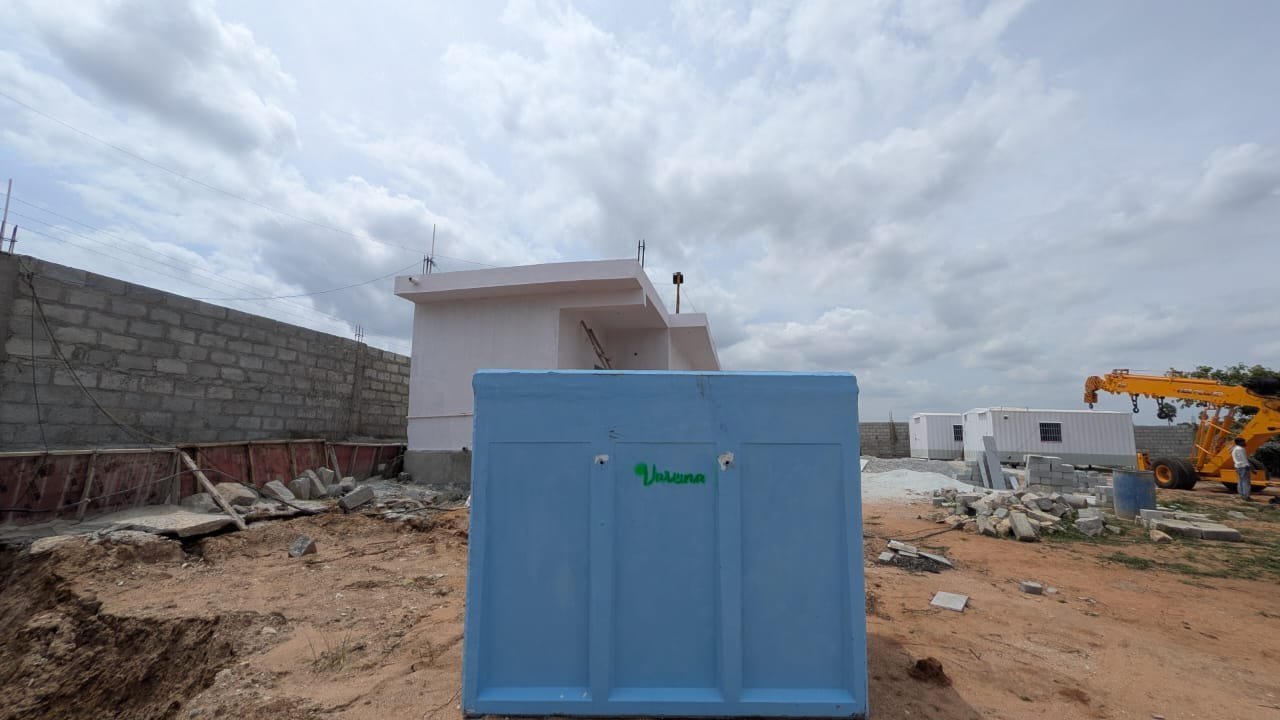
RCC water tanks are generally designed as part of the building's water storage system and can be constructed on site or as precast units.
You'll see them all the time in apartment blocks, hospitals, schools, commercial premises and industrial sites.
Why? Because they often have to store a hell of a lot more water than a normal household would. They may well require an underground water tank, a fire water reserve or a water storage system that's specifically designed to the site.
RCC tanks provide that flexibility. You can size them and plan their capacity in accordance with the available space and the project requirements.
For liquid retaining concrete works IS 3370 gives the relevant design requirements.
Plastic Water Tank vs RCC Water Tank: 7 Differences You Should Know
Let's get to the part that matters when you're actually making a purchase or planning a project.
1. Cost: Is a Plastic Tank Always Cheaper?
Let's say you need a tank of 1,000 liters in your house. You can usually get a cheaper price for a plastic water tank because it is already made and just has to be put in. You don’t need to arrange for concrete, steel, shuttering or construction labor.
The RCC water tank is costly to construct in the initial stages. The cost covers materials, reinforcement, labor, waterproofing and other installation requirements.
But this is something to think about.
Now imagine you are designing the water storage for a large residential complex. The requirement is 50,000 litres. You could put in a number of plastic tanks, but then you've got to consider where they're going to go, how they're going to be connected up and how the whole thing's going to be kept in order.
That project could be better done with an RCC tank.
So while comparing plastic water tank price and RCC water tank cost don't consider the price only. Compare the total cost for the same amount of storage.
2. Lifespan: How Long Can You Expect the Tank to Last?
Nobody wants to spend for a tank and then have to replace it a few years later.
Plastic tanks can last for years, but the life span depends on the quality of the material, manufacturing and installation conditions. Sunlight is one thing to consider. Tanks exposed to harsh sunlight all year round will degrade faster than a tank that is kept in the shade.
RCC water tanks are commonly chosen for the projects where storage for long term is needed. When properly constructed, reinforced and waterproofed, they can last for several decades.
That said, there are some issues with concrete tanks. If the work is bad or the waterproofing is bad, you will get cracks and leakage. Ignoring these problems can lead to very costly repairs.
The construction process is also why it deserves attention.
This is also why the construction process deserves attention. A good design and proper execution make a real difference to how long an RCC tank remains in service.
3. Installation: Which Tank Is Easier to Set Up?
If the timing of installation is your top priority, plastic tanks have a clear advantage.
They are ready to use. Once the supporting platform is ready, the tank itself can usually be placed and connected in a single day. There's no concrete to cure or large construction to do.
RCC tank requires more planning. In conventional construction, work includes reinforcement, shuttering, concreting and curing. This can take some weeks, depending on the project.
Precast RCC tanks are a different story.
The entire tank is not constructed on site. The unit is manufactured and delivered to the site for installation. This reduces the amount of work that needs to be done on site.
Varuna offers pre-cast RCC water tanks which can be installed in about 3 to 5 days depending on location conditions and project requirements.
This can be an important consideration for builders working under construction deadlines.
4. Weight and Placement: Can You Install Any Tank on Your Roof?
Not really. And this is something people occasionally overlook when planning water storage.
Plastic tanks are light in weight and are therefore frequently used on rooftops. But the supporting slab also has to be strong enough to hold the weight of the tank and its contents.
Here’s a basic example. One ton of water is held in a tank with 1,000 liters of water. That’s a lot of weight, even before you count the weight of the tank itself.
RCC tanks are way heavier as they are made of concrete. Installing one overhead requires good structural planning. This is not something that should be decided after the building is complete.
RCC tanks are generally used for underground installations. They can be designed to resist the pressure of the surrounding soil and other external loads.
However, a regular plastic rooftop tank is not designed to be buried. If you need a plastic water tank to be buried underground, it needs to be designed for this purpose.
5. Hygiene: Which Tank Is Better for Storing Clean Water?
This is probably one of the first questions homeowners ask, especially if the tank is going to be used for drinking and household water.
Plastic tanks made from suitable food-grade material provide smooth inner surfaces. They are relatively easy to clean and many models have dark inner layers to cut down on sunlight getting into the tank. This controls the growth of algae.
RCC tanks also have an advantage. Their solid walls block sunlight, and underground installation helps protect the stored water from direct temperature changes.
However, concrete is naturally porous. An RCC tank needs proper waterproofing and a suitable food-safe internal lining when used for drinking water.
So, which one keeps water cleaner?
There's no automatic winner here. The quality of the tank, the internal surface, the lid and regular cleaning all make a difference. Even a good-quality tank can become unhygienic if it's neglected.
6. Storage Capacity: What If Your Water Requirement Increases?
This is where the difference between the two becomes more noticeable.
For a small home, choosing a plastic water tank is usually straightforward. You select a capacity based on the number of people in the house and their daily water consumption.
But consider an apartment building with hundreds of residents. Its water requirement is much higher, and storing that volume in several small tanks may not be the most convenient arrangement.
You'll need additional space, more connections and a proper distribution system.
RCC water tanks offer more flexibility in this situation. They can be designed around the available area and the amount of water the building needs to store.
That's why they're commonly considered for apartments, hospitals, factories, schools and other large facilities.
7. Maintenance: What Happens After the Tank Is Installed?
Once the tank is in place, most people don't want to think about it again. Unfortunately, a little maintenance is necessary whichever option you choose.
Plastic tanks are relatively simple to maintain. Clean them periodically, check that the lid is secure and inspect the pipe connections. If the tank develops serious damage, replacement may be more practical than repair.
RCC tanks need periodic inspections of their walls, joints and waterproofing. If you notice seepage or cracks, it's better to get them checked early instead of waiting for the damage to spread.
The maintenance requirements are different, but neither tank should be left unattended for years.
Plastic vs RCC Water Tank: A Quick Comparison
Still finding it difficult to decide? Here's a simple comparison you can refer to.
|
Factor |
Plastic Water Tank |
RCC Water Tank |
|
Initial cost |
Generally lower |
Generally higher |
|
Large storage requirements |
Multiple tanks may be needed |
Suitable for large capacities |
|
Lifespan |
Depends on material quality and exposure |
Can last for decades with proper construction |
|
Installation |
Usually quick |
Precast: days; conventional: weeks |
|
Weight |
Lightweight |
Heavy |
|
Rooftop installation |
Commonly used |
Requires structural planning |
|
Underground installation |
Only specially designed models |
Suitable with proper structural design |
|
Available sizes |
Standard manufactured sizes |
Customised dimensions and capacities |
|
Maintenance |
Cleaning and fitting checks |
Structural and waterproofing inspections |
|
Relocation |
Can be moved |
Generally permanent |
|
Best suited for |
Homes and smaller storage needs |
Apartments, industries and bulk storage |
So, Which Water Tank Should You Actually Choose?
By now, you may have noticed that neither option is better in every situation. It really comes down to the purpose of the installation.
Let's take a few common examples.
If you're building an independent house: A plastic overhead water tank will usually be sufficient for everyday water storage. There's little reason to invest in a large RCC structure if your requirement is relatively small.
If you're managing an apartment complex: Your storage requirement is likely to be much higher. An underground RCC water tank can provide the bulk storage needed to serve multiple households.
If you're planning a hospital or school: Water demand, available space and daily usage need to be considered. RCC tanks can be designed to meet larger storage requirements.
If you own a factory: Depending on the process and water demand, an RCC tank can be a suitable option for permanent, large-capacity storage.
If you need a fire water reserve: A properly designed RCC tank can accommodate the storage requirements of a fire protection system.
If the installation is temporary: A plastic tank may be more convenient because it can be relocated when required.
The important thing is to calculate your actual water requirement before deciding on the tank size and material.
Here's an Interesting Option: Why Not Use Both?
You don't always have to choose between plastic and RCC. In fact, using both can be a sensible arrangement for larger buildings.
Think about a multi-storey apartment complex. The building needs a large quantity of water, but keeping the entire supply in rooftop tanks isn't practical.
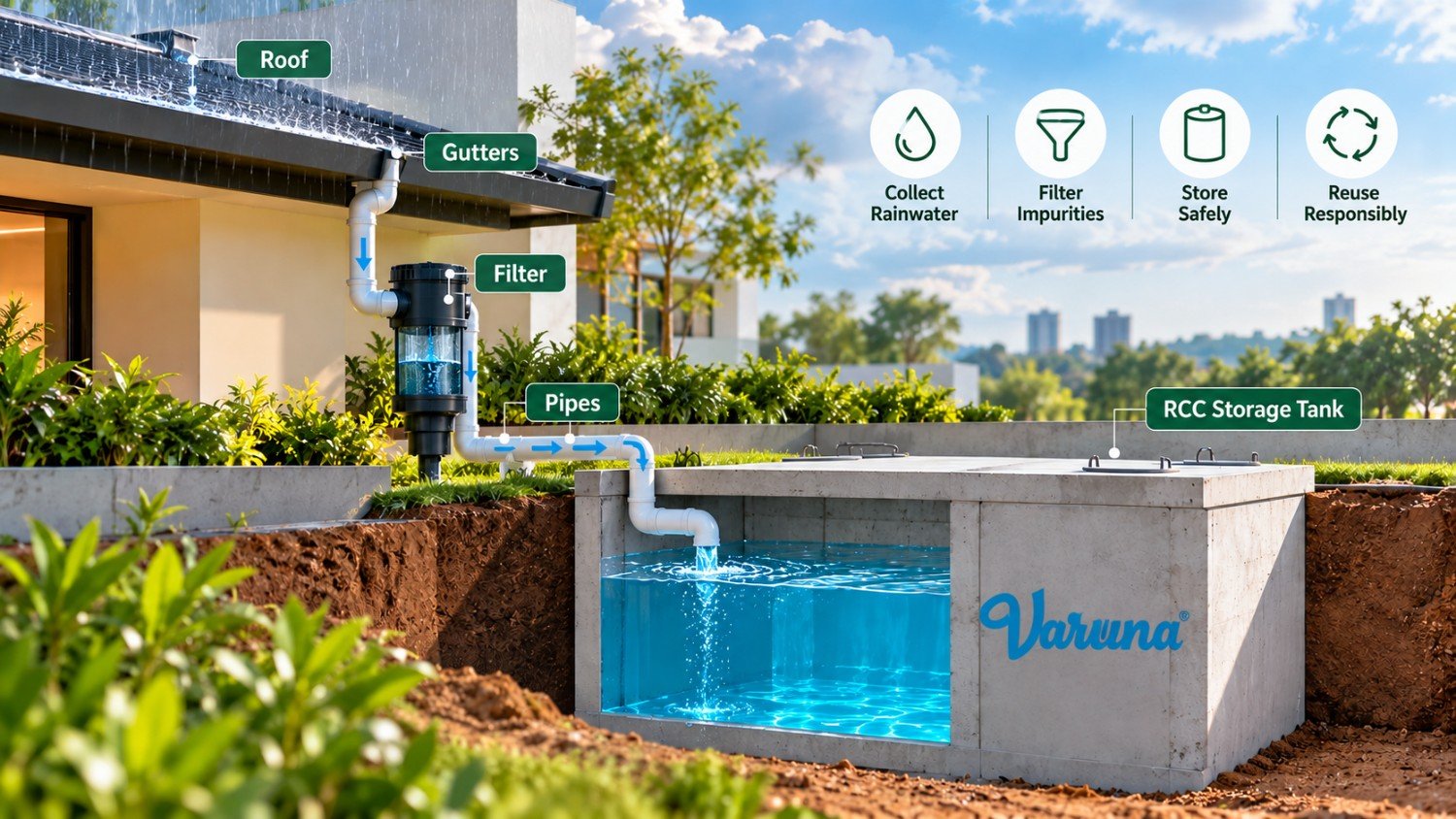
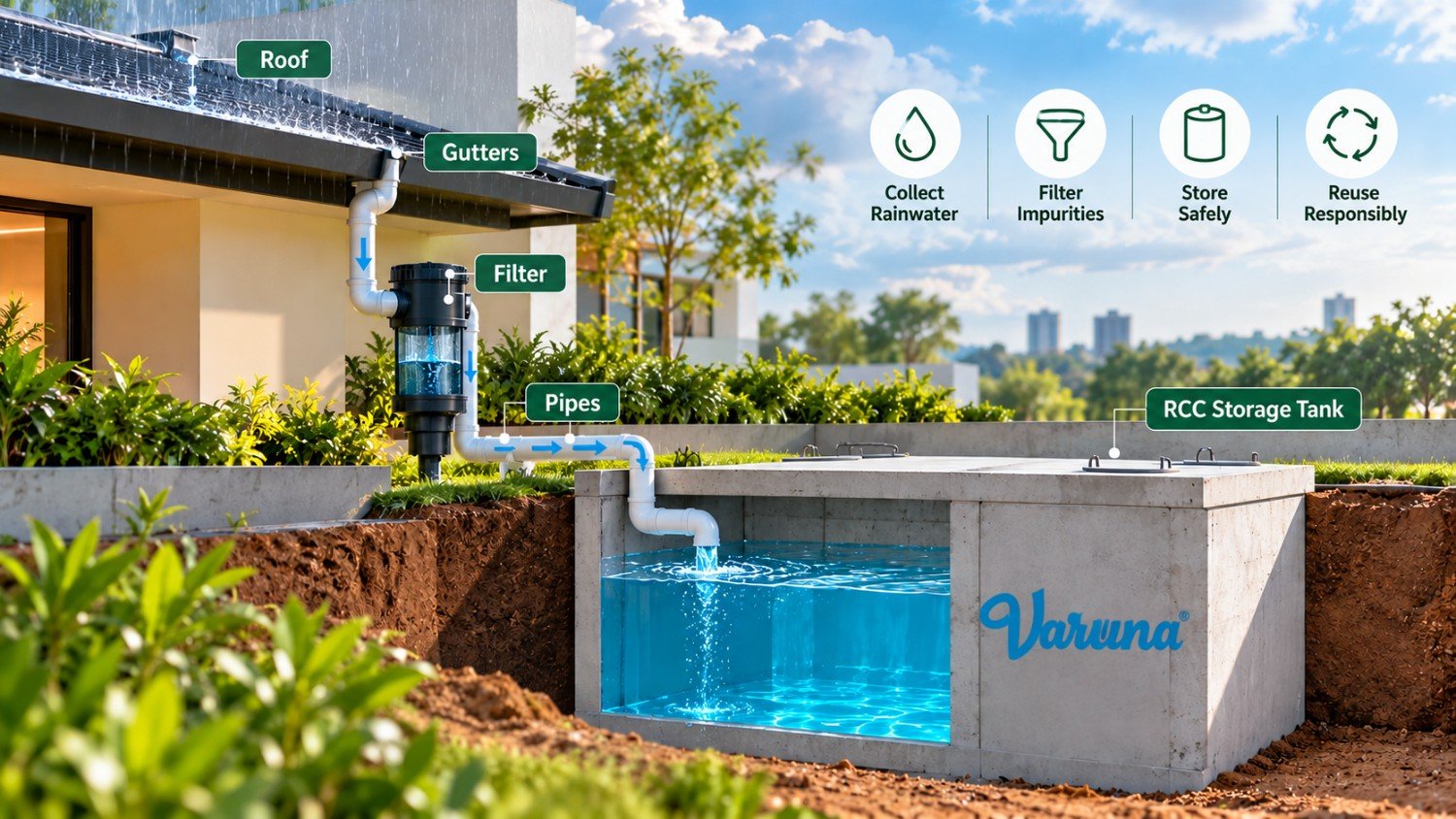
Instead, the main water supply can be stored in a large underground RCC water tank. Pumps then transfer water to plastic overhead tanks, which help distribute it across the building.
The RCC tank takes care of bulk storage, while the plastic tanks handle overhead storage.
Each has a separate job, and together they form a practical water storage system.
Of course, the actual setup will depend on the building's plumbing design, water demand and available space.
Precast RCC Water Tanks: An Option Worth Exploring
If you've decided that RCC is the right choice for your project, you may also want to look at precast RCC water tanks.
Traditionally, RCC tanks are constructed at the site. This involves arranging construction materials, labour, reinforcement, shuttering and curing. The process needs proper coordination and can take time.
With precast construction, the tank is manufactured separately and transported to the project site for installation.
This means less construction work at the location and a shorter installation schedule compared with conventional construction.
For builders and facility managers, this can make project planning easier, particularly when the site has limited space or construction deadlines are tight.
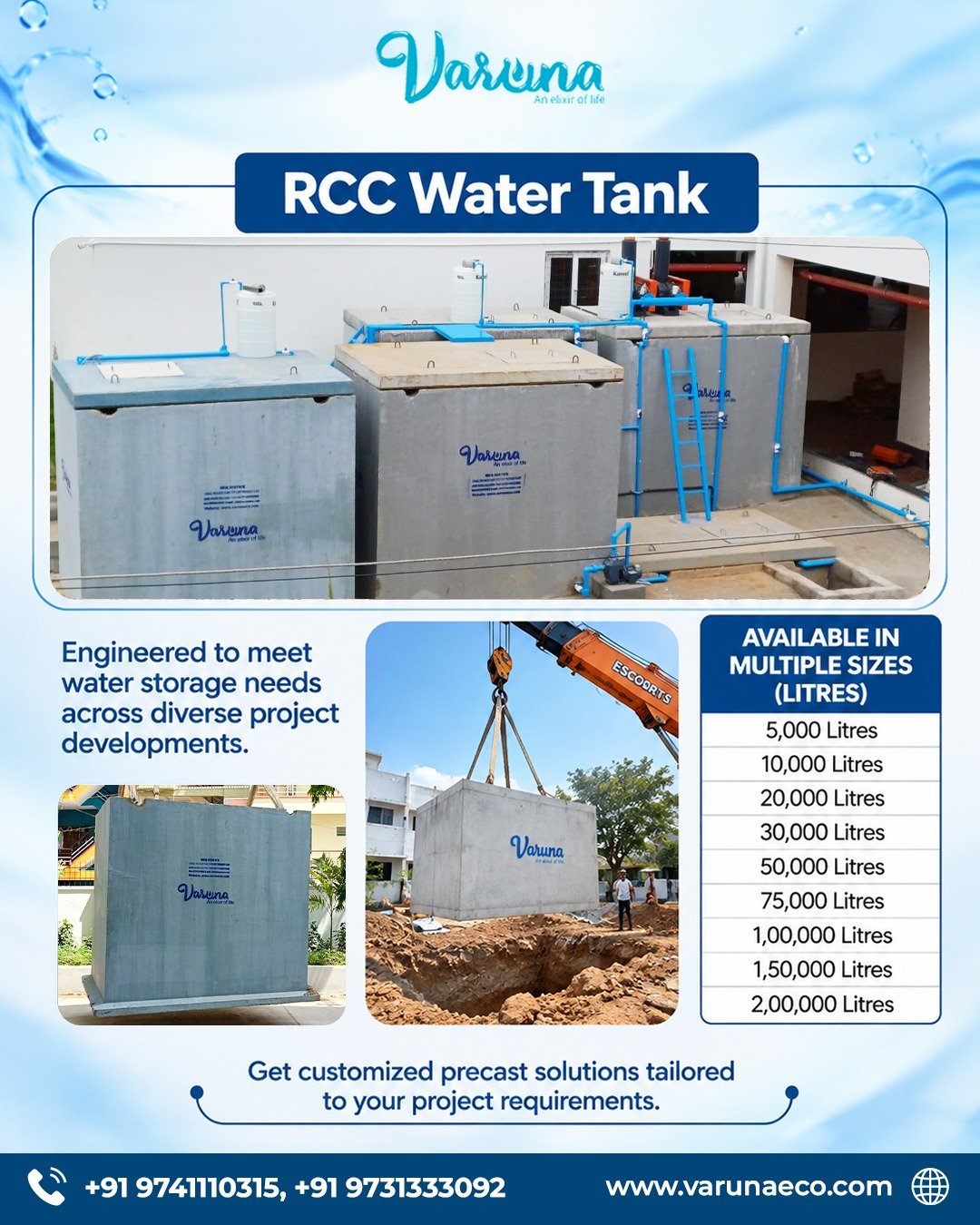
Varuna provides precast RCC water tanks in capacities ranging from 10,000 to 200,000 litres. They are designed for residential, commercial and industrial projects that need larger water storage solutions.
Rather than selecting a standard tank size, the capacity and installation requirements can be discussed according to the project.
Frequently Asked Questions
1. Which is better, a plastic water tank or an RCC water tank?
For regular household and rooftop storage, plastic tanks are generally a convenient choice. RCC tanks are more suitable for projects that need large storage capacities, underground installation or permanent storage arrangements.
2. How long does an RCC water tank last?
A properly designed and maintained RCC water tank can last for several decades. Its actual lifespan depends on concrete quality, reinforcement, waterproofing and maintenance.
3. Why is a plastic water tank cheaper than an RCC tank?
Plastic tanks are manufactured as ready-made products, so installation is relatively simple. RCC tanks involve construction materials, steel reinforcement, labour and waterproofing, which increases the initial investment.
4. Can a plastic water tank be installed underground?
Only specially designed underground plastic tanks should be used. Regular rooftop tanks aren't built to withstand the pressure of surrounding soil and may deform or get damaged.
5. Which water tank is suitable for industrial use?
RCC tanks are commonly used in industrial facilities that need large quantities of water storage. Their dimensions and capacities can be planned according to the facility's requirements.
6. Does an RCC water tank need waterproofing?
Yes. Waterproofing helps prevent seepage and protects the concrete structure. If the tank is used for drinking water, its internal lining should also be suitable for potable water.
7. What is the difference between precast and conventional RCC water tanks?
A conventional RCC tank is constructed at the project site. A precast RCC tank is manufactured separately and transported to the location for installation. Precast construction can reduce on-site work and shorten the installation schedule.
Choosing a water storage tank doesn't have to be complicated. Start with a simple question: how much water do you actually need to store, and where will the tank be installed?
For a regular household, a plastic water tank is often enough. It's affordable, easy to install and available in several capacities.
For larger buildings and industrial facilities, the requirement is different. Underground storage, higher capacity and long-term use make RCC water tanks a more suitable option to explore.
If you're planning a project that needs substantial water storage, Varuna offers precast RCC water tanks ranging from 10,000 to 200,000 litres, with customised solutions for residential, commercial and industrial applications.
Not sure which capacity would work for your project? Get in touch with Varuna and discuss your requirements with the team.