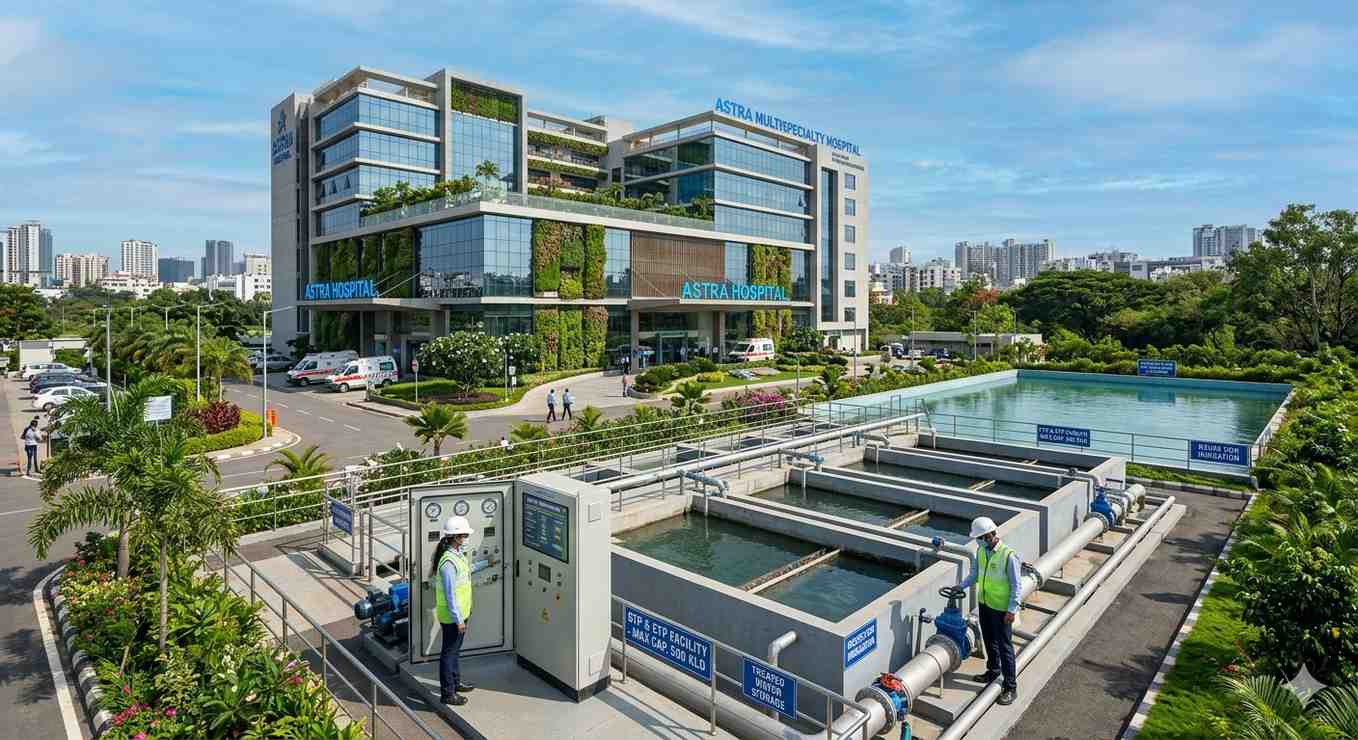
STP & ETP for Private Hospitals in Bangalore: Compliance & Best Practices Guide 2026 by Varuna
Learn compliance, design, and best practices for STP & ETP systems in private hospitals in Bangalore. Ensure KSPCB compliance and sustainable wastewater management with Varuna.
Private hospitals in Bangalore operate in a highly regulated and fast-paced healthcare environment. With advanced diagnostics, specialty departments, and high patient turnover, wastewater generation is both significant and complex.
Unlike domestic sewage, hospital discharge may contain disinfectants, laboratory residues, pharmaceutical traces, and biological contaminants. In a water-sensitive city like Bangalore, untreated discharge can create environmental and regulatory risks.
That is why installing properly designed STP & ETP for Private Hospitals in Bangalore is a regulatory necessity in 2026.
This guide explains compliance requirements, approval processes, and operational best practices for private healthcare institutions—drawing from practical implementation experience in Bangalore, including projects supported by Varuna.
Why Wastewater Treatment Is Critical for Private Hospitals
Private hospitals typically include:
- ICUs and surgical units
- Diagnostic laboratories
- Dialysis centers
- In-house pharmacies
- Kitchen and housekeeping facilities
Each department contributes differently to wastewater generation.
Domestic discharge from wards and washrooms differs significantly from chemical-rich effluent produced in laboratories. A properly engineered STP & ETP for Private Hospitals in Bangalore must address both streams through separate but integrated systems.
Ignoring proper treatment can lead to:
- Regulatory notices
- Penalties
- Operational disruption
- Reputational damage
For private institutions, compliance directly impacts credibility. This is why wastewater planning should be handled by experienced environmental solution providers such as Varuna, who understand both regulatory expectations and hospital operational realities.
Understanding STP and ETP in Private Hospitals
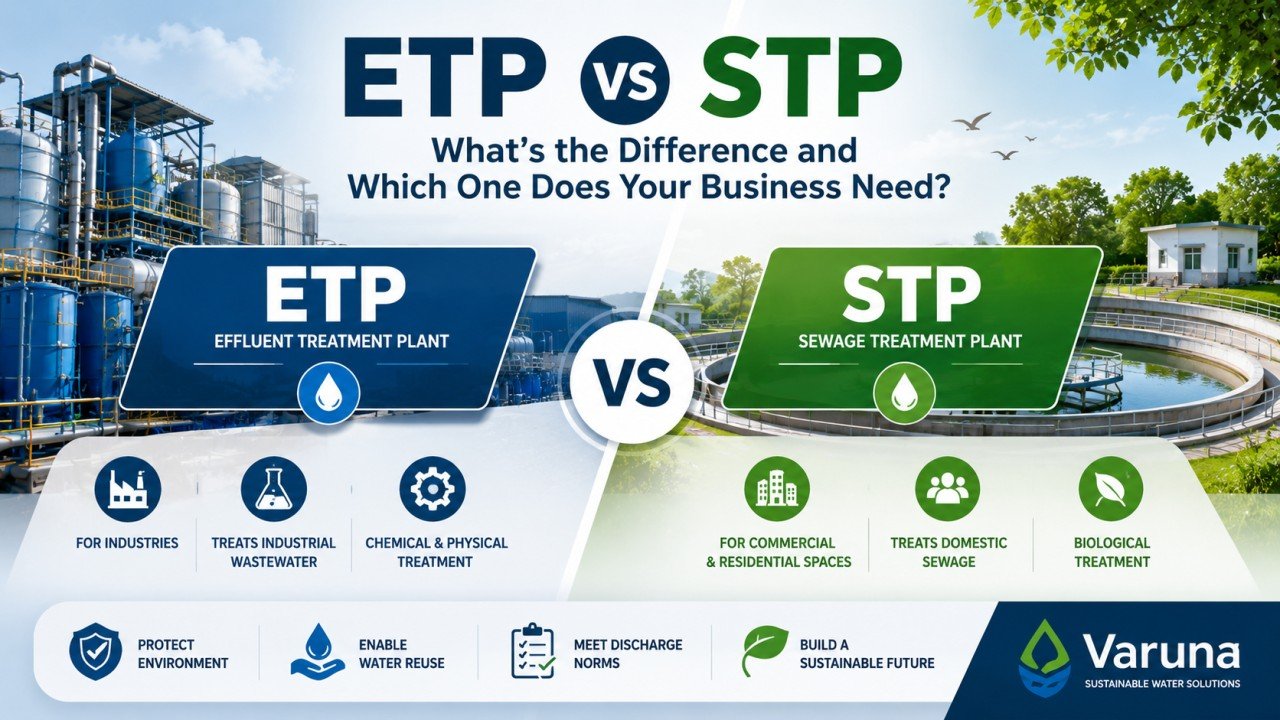
Sewage Treatment Plant (STP)
An STP for private hospitals treats domestic wastewater from:
- Patient rooms
- Toilets
- Kitchens
- General cleaning operations
Biological treatment removes organic matter before disinfection. Treated water may be reused for flushing or landscaping.
Proper STP sizing and load balancing — areas where Varuna provides technical audits — are critical to prevent overloading.
Effluent Treatment Plant (ETP)
An ETP for private hospitals treats complex discharge from:
- Laboratories
- Operation theatres
- Diagnostic units
- Pharmacies
Chemical and physical treatment processes neutralize hazardous compounds that biological systems alone cannot manage.
Because most private hospitals in Bangalore operate both domestic and laboratory facilities, dual STP and ETP systems are typically required.
Varuna’s approach ensures that both systems are integrated but independently optimized for compliance stability.
KSPCB Compliance Requirements (2026 Update)
All private hospitals in Bangalore must comply with regulations set by the Karnataka Pollution Control Board (KSPCB).
The compliance process includes:
- Obtaining Consent to Establish (CTE)
- Installing approved STP & ETP systems
- Conducting trial runs
- Securing Consent to Operate (CTO)
- Maintaining discharge and maintenance records
In 2026, inspections focus heavily on operational stability and documentation.
Authorities review:
- Discharge quality reports
- Flow monitoring systems
- Maintenance logs
- Sludge disposal practices
Compliance with KSPCB norms is continuous—not a one-time approval.
Hospitals working with structured compliance partners like Varuna are better positioned to maintain inspection readiness and documentation accuracy.
Capacity Planning for Private Hospitals in Bangalore
Designing STP & ETP for Private Hospitals in Bangalore requires accurate wastewater assessment.
Capacity depends on:
- Bed strength
- OPD footfall
- Dialysis units
- Laboratory intensity
- Staff strength
- Future expansion plans
Many private hospitals expand specialty services without upgrading wastewater infrastructure. This often results in overloaded systems and compliance risks.
Technical wastewater audits—frequently conducted by Varuna in Bangalore healthcare facilities—help determine actual discharge loads rather than relying on theoretical estimates.
Proper capacity planning protects both compliance and operational continuity.
Best Practices for Hospital Wastewater Compliance
Maintaining compliance requires structured operational practices.
- Segregation of Wastewater: Laboratory effluent should be treated separately before merging with domestic sewage.
- Preventive Maintenance: Routine inspection of pumps, aerators, and dosing systems ensures stability.
- Documentation Discipline: Discharge records and maintenance logs must be consistently updated.
- Peak Load Planning: Hospitals should prepare for seasonal surges and emergency scenarios.
- Skilled Supervision: Trained operators reduce the risk of system failure.
Private hospitals that treat STP & ETP systems as compliance assets—rather than secondary utilities—experience fewer regulatory disruptions.
Common Challenges in Bangalore’s Private Hospitals
Hospitals in Bangalore frequently encounter:
- Limited construction space
- Increasing diagnostic load
- Higher antibiotic discharge
- Rapid infrastructure expansion
- Dependence on outsourced maintenance
Installing STP & ETP for Private Hospitals in Bangalore is only part of the solution. Long-term compliance depends on consistent monitoring and structured maintenance frameworks.
Compliance-oriented environmental firms such as Varuna help private hospitals integrate wastewater systems into long-term infrastructure planning rather than reactive upgrades.
Sustainability & 2026 Outlook
In 2026, sustainability is becoming central to private healthcare operations.
Modern hospital wastewater treatment systems now incorporate:
- Energy-efficient aeration
- Modular installation designs
- Water reuse systems
- Monitoring technologies
Treated water reuse reduces freshwater dependence—a critical factor in Bangalore’s water-stressed environment.
Through compliance-focused and sustainability-driven engineering, Varuna supports private hospitals in aligning environmental responsibility with operational efficiency.
Conclusion
In 2026, wastewater management for private hospitals in Bangalore is a structured regulatory requirement under KSPCB.
Installing properly designed STP & ETP for Private Hospitals in Bangalore ensures the following:
- Environmental protection
- Regulatory compliance
- Operational continuity
- Sustainable water use
With careful planning, preventive maintenance, and compliance-focused implementation—supported by experienced partners like Varuna—private hospitals can maintain audit-ready and environmentally responsible wastewater systems.