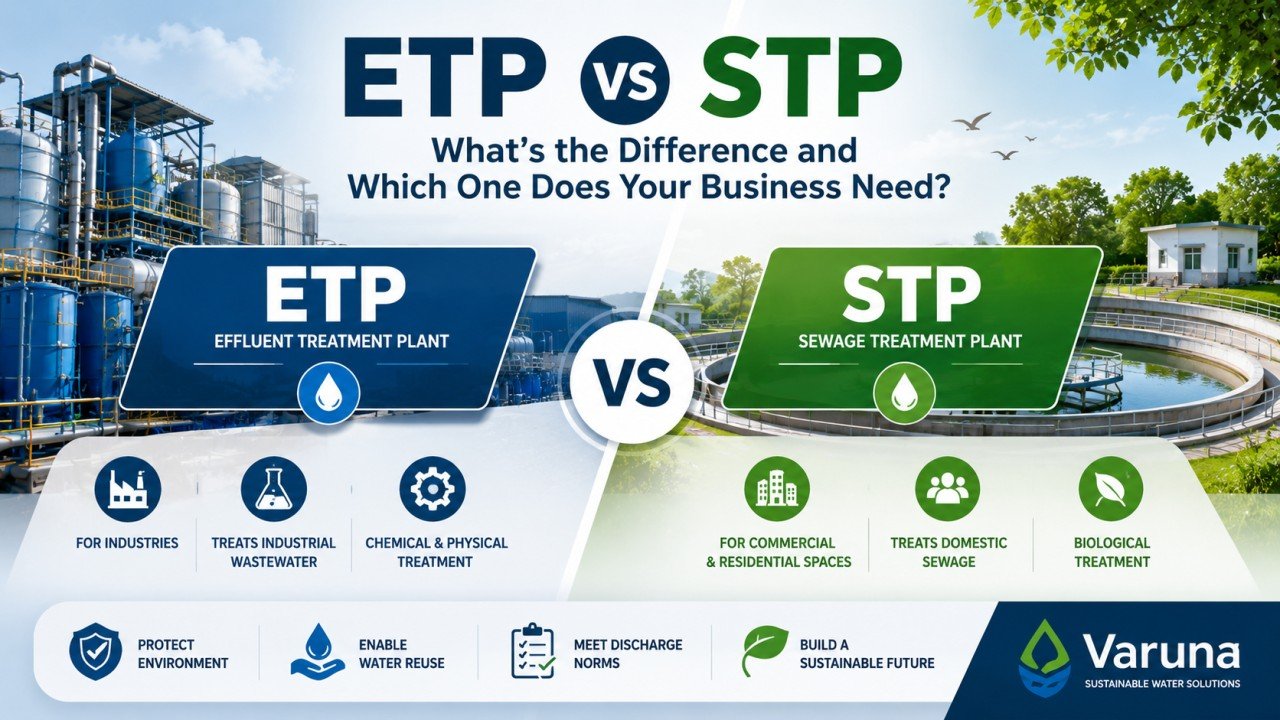
ETP vs STP: What’s the Difference and Which One Does Your Business Need?
Understand the difference between ETP and STP, their applications, treatment processes, and how to choose the right wastewater treatment solution for your business.
Introduction
People mix up ETP and STP more often than you'd think.
Both treat wastewater, sure. But they're not built for the same job — feed the wrong wastewater into the wrong system, and you either get poor treatment, wasted money, or a plant that can't meet the discharge rules it's supposed to.
So what's ETP vs STP, really, in plain terms?
Here's the short version: STP handles sewage—water from people using a building. ETP handles effluent—water from industrial or manufacturing processes.
That's the core idea. Now let's actually dig into it.
What Exactly Is an STP?
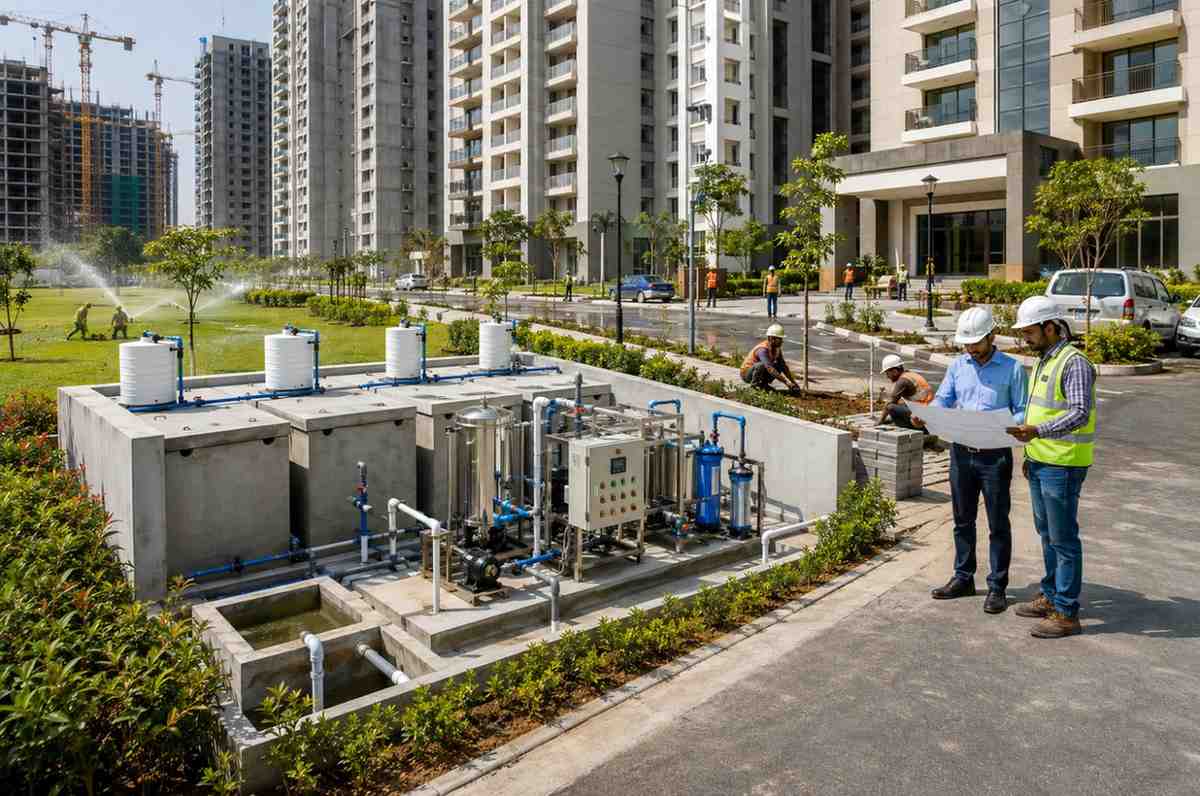
A Sewage Treatment Plant, or STP, treats the domestic wastewater a building produces day to day.
Think:
- Toilets
- Bathrooms
- Kitchens
- Wash basins
- Canteens
- Hostels
- Residential blocks
- Office buildings
This kind of water mostly carries organic waste, suspended solids, nutrients, and microorganisms—nothing exotic, just what you'd expect from people living and working somewhere.
A well-built Sewage Treatment Plant runs the water through physical and biological steps to knock the pollutants down before that water either gets reused or released, depending on what's required.
Where STPs Show Up
You'll typically find STPs at:
- Apartment complexes
- Housing societies
- Hotels and resorts
- Schools and colleges
- Hospitals
- Office buildings
- Commercial complexes
- Institutional campuses
Take an apartment complex, for instance — it needs an STP to treat what residents flush and drain, so that water can go back out for gardening or similar non-drinking uses instead of just leaving the property.
And What's an ETP?
An Effluent Treatment Plant, or ETP, is built for a different beast entirely—wastewater coming out of industrial or commercial processes.
Unlike sewage, which is fairly predictable, industrial effluent can look completely different depending on what the plant actually makes.
It might contain:
- Chemicals
- Oils and grease
- Heavy metals
- High dissolved solids
- Suspended solids
- Process-specific chemicals
- Detergents
- Contaminants unique to that industry
So an ETP for industries almost always gets designed around the specific effluent it's meant to handle — there's no generic version that works everywhere.
Where ETPs Show Up
You'll find ETPs running in:
- Manufacturing plants
- Automobile industries
- Engineering units
- Textile mills
- Food processing facilities
- Pharmaceutical units
- Chemical plants
- Auto service centres
- Car wash operations
The treatment approach shifts depending on what's actually in the water and how concentrated it is.
ETP vs. STP: The Core Difference, Side by Side
The main thing that separates them is where the wastewater comes from and what it's made of.
|
Factor |
STP |
ETP |
|
Full Form |
Sewage Treatment Plant |
Effluent Treatment Plant |
|
Main Source |
Domestic sewage |
Industrial or process wastewater |
|
Typical Users |
Apartments, hotels, schools, hospitals |
Factories, industries, workshops |
|
Main Contaminants |
Organic matter, solids, nutrients, pathogens |
Chemicals, oils, metals, process contaminants |
|
Treatment Approach |
Mostly biological + physical |
Physical, chemical, and/or biological |
|
Design Basis |
Sewage load and flow |
Industrial effluent characteristics |
|
Water Reuse |
Landscaping, flushing, similar uses |
Process reuse and other suitable uses |
|
Customization |
Based on sewage load and project needs |
Highly dependent on the industrial process |
This table's a starting point, not a rulebook—actual design always comes down to characterizing the wastewater and engineering around the specific project.
Why an STP Can't Handle Industrial Effluent
A common assumption — an STP can treat basically anything. It can't.
Domestic sewage and industrial effluent aren't even close to the same thing.
Wastewater from a car workshop or a manufacturing unit, for example, might carry oils, grease, chemicals, and metals—stuff a standard sewage treatment process just wasn't built to deal with.
Which means any real industrial wastewater treatment system has to be built around what's actually coming out of that facility, not borrowed from a domestic setup.
That's exactly the gap an ETP fills.
Can an ETP Handle Sewage, Then?
Not automatically, no.
If a facility's wastewater is mostly domestic—toilets, kitchens, bathrooms, that sort of thing—an STP is usually still the right category to go with.
But plenty of facilities generate both. A manufacturing site, for instance, has employees using restrooms and canteens and, separately, a production process generating effluent.
In cases like that, you're often looking at two separate streams, each assessed on its own—different composition, different treatment goals, and different rules to meet.
How Does an STP Actually Work?
Setups vary, but a typical STP runs through a few stages:
- Preliminary Treatment Screens catch the bigger debris before it can damage anything downstream.
- Primary Treatment Solids that can settle or float get separated out early.
- Biological Treatment Microorganisms go to work breaking down organic matter. Depending on the project, this might use MBBR, SBR, MBR, or some other biological process.
- Secondary Clarification Whatever biological solids remain get separated from the treated water.
- Tertiary Treatment & Disinfection If the reuse or discharge standard demands it, extra filtration and disinfection get added at the end.
Exactly how far this goes depends on the wastewater and what quality the treated water needs to hit.
How Does an ETP Work?
An ETP mixes and matches treatment steps depending on what the effluent actually contains. A fairly typical sequence looks like this:
Collection → screening → equalization → chemical treatment → biological treatment → filtration → disinfection or advanced treatment
But that's not fixed, not by a long shot.
Wastewater loaded with oil and grease might need dedicated separation before anything else happens. Effluent with certain dissolved contaminants might need chemical dosing or more advanced treatment altogether.
Which is exactly why an ETP has to be engineered around the real wastewater—copying someone else's design rarely works.
So Which One Does Your Facility Actually Need?
Start with one question: what kind of wastewater are you actually generating?
Go with an STP if your wastewater mainly comes from:
- Toilets
- Bathrooms
- Kitchens
- Canteens
- Hostels
- People living or working on-site
- General office/commercial use
Apartments, hotels, schools, hospitals, and office buildings—this is their territory.
Consider an ETP if your wastewater comes from:
- Manufacturing
- Production processes
- Industrial washing
- Chemical processing
- Auto servicing
- Car washing
- Food processing
- Any other industrial operation
Either way, get the wastewater characterized before locking in a treatment process—guessing here is expensive later.
What If You Generate Both?
Happens all the time, especially on larger sites.
A manufacturing campus, for example, might have:
Domestic sewage—from toilets, canteens, and employee facilities
and
Industrial effluent—from production, cleaning, and processing
These two streams almost always need different treatment approaches.
Don't assume one plant magically handles both. Evaluate each stream on its own—source, makeup, flow, and what you actually want out the other end.
Which One Costs More—ETP or STP?
There's no fixed answer here. Genuinely depends.
Cost swings are based on things like:
- Treatment capacity
- Wastewater characteristics
- Technology chosen
- Required output quality
- Civil work involved
- Equipment selected
- Automation level
- Available space
- Sludge handling
- Installation needs
- Water reuse goals
An industrial ETP can get complex fast if the contaminants are tough to treat. But a large STP with advanced treatment and recycling built in can also run up a serious bill.
So the real question isn't "which is cheaper."
It's: "which system is actually designed right for what we're generating?"
Can Both Include Water Recycling?
Yes, both can.
Water reuse fits into either system, as long as the treated water quality matches what the intended use actually needs.
For an STP, treated water often gets reused for:
- Landscaping
- Flushing
- Cleaning
- Other approved non-drinking uses
For an ETP, treated water might go back into certain industrial processes, or other suitable uses—again, depending on quality and what the process actually needs.
Which is why a water recycling system is worth planning in from the start, not bolted on later.
What Info Do You Need Before Choosing?
Before locking in a plant, gather as much detail as possible.
For an STP, that means:
- Number of users
- Average daily flow
- Peak flow
- Sewage characteristics
- Available installation space
- Reuse goals
For an ETP, you'll also want:
- Industrial process details
- Where the effluent comes from
- Daily and peak flow
- pH
- BOD
- COD
- TSS
- TDS
- Oil and grease levels
- Heavy metals or specific chemicals, where relevant
- Target treated-water quality
This is the information engineers actually work with to build something that fits.
Mistakes People Make Choosing a Treatment Plant
- Mistake 1: Picking by capacity alone A 100 KLD plant isn't automatically right just because the flow is 100 KLD. The quality of the water matters just as much as the amount.
- Mistake 2: Assuming STP and ETP are interchangeable. They're not. The treatment has to match the wastewater, not the other way around.
- Mistake 3: Ignoring future growth. Production ramps up, occupancy increases—plan the system with that in mind, not just today's numbers.
- Mistake 4: Only looking at installation cost A cheaper plant upfront isn't cheaper over its life. Energy, chemicals, maintenance, sludge handling, downtime—all of it adds up.
- Mistake 5: Skipping reuse entirely. If treated water can be reused somewhere appropriate, that's real value being left on the table by not planning for it.
An Easy Way to Remember the Difference
Here's the simplest way to keep it straight:
- STP = Sewage: wastewater from people using a building.
- ETP = Effluent: wastewater from industrial or commercial processes.
That's the quick mental shortcut. But actual plant design should still come from proper wastewater characterization, flow data, and what you're trying to achieve—not just the shortcut alone.
Why Varuna for STP & ETP Solutions?
Varuna builds wastewater treatment solutions across residential, commercial, institutional, healthcare, automobile, and industrial projects.
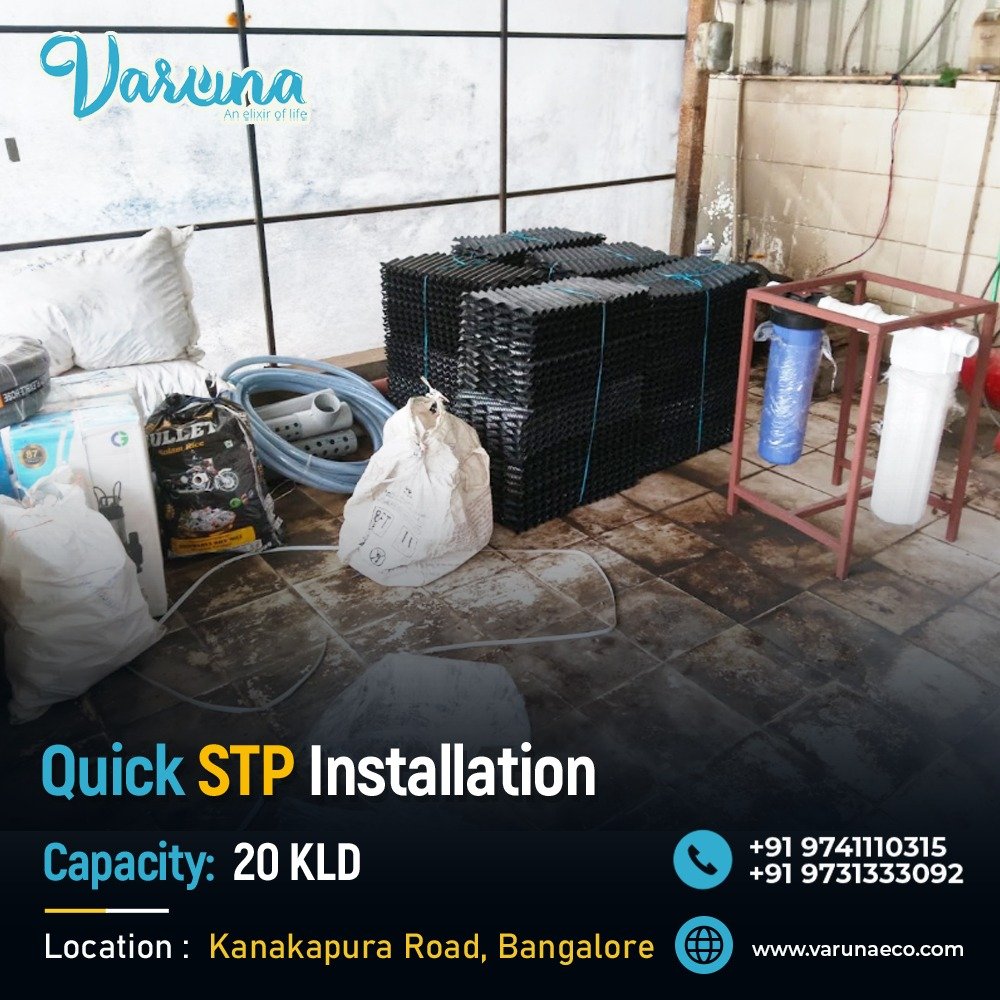
From Quick STPs and packaged sewage systems to fully customized Effluent Treatment Plants, the right setup gets built around your project's actual wastewater, capacity, available space, and reuse goals.
It's never just about installing a plant. It's about building something that treats reliably, runs efficiently, supports reuse where it makes sense, and holds up over the long run.
Conclusion
At the end of the day, ETP vs. STP comes down to one thing—what kind of wastewater you're actually dealing with.
STP handles domestic sewage—residential, commercial, and institutional buildings—that whole category.
ETP handles industrial or process effluent, which can look wildly different from one industry to the next.
If your facility produces wastewater, don't pick a treatment plant on price or capacity alone.
Understand your wastewater first.
Then figure out what you actually want from the treated water.
Then choose the technology that fits.
Do it in that order, and the investment actually pays off—reliably, for years, not just on paper.