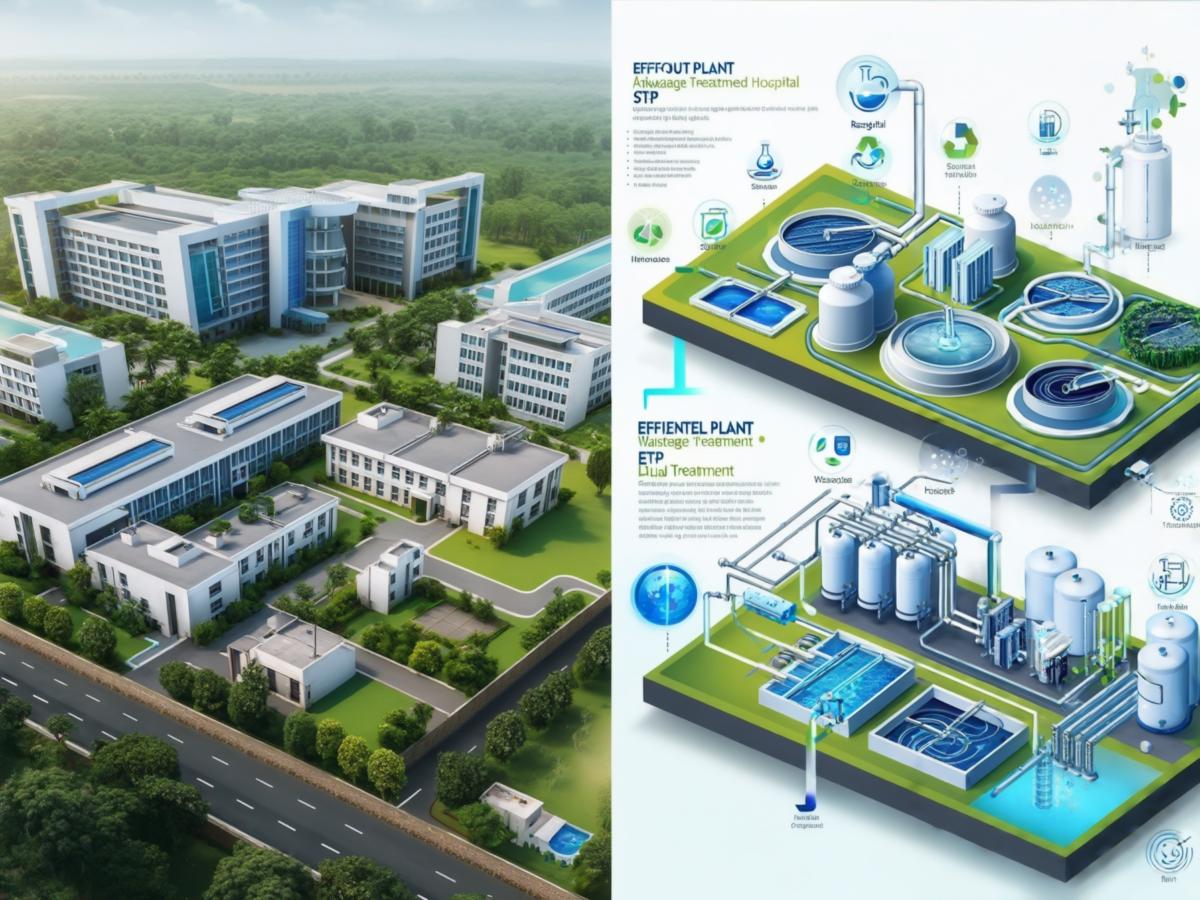
STP & ETP for Medical Colleges in Bangalore: Standards & Approval Guide 2026
Complete guide to STP & ETP for medical colleges in Bangalore. Learn KSPCB standards, approval process, capacity planning, and compliance in 2026.
Medical colleges in Bangalore operate on a scale far beyond standalone hospitals. A typical campus includes a teaching hospital, advanced research laboratories, anatomy and pathology blocks, student hostels, staff housing, and administrative buildings—all generating distinct wastewater streams.
Because of this complexity, installing properly engineered STP & ETP for Medical Colleges in Bangalore requires a campus-wide infrastructure strategy rather than a single-system solution.
In 2026, regulatory expectations under the Karnataka Pollution Control Board (KSPCB) have become more structured, especially for institutions handling laboratory and research effluent. Compliance now depends not just on plant installation but on operational consistency and documentation readiness.
This guide outlines the standards, approval process, and planning considerations for medical colleges—and how Varuna supports institutions in Bangalore with technically sound and regulation-aligned wastewater systems.
Why Medical Colleges Require Dedicated STP & ETP Systems
Medical colleges generate wastewater from multiple sources:
- Teaching hospital wards
- Research and diagnostic laboratories
- Dissection and anatomy halls
- Student hostels
- Canteens and utility areas
- Staff quarters
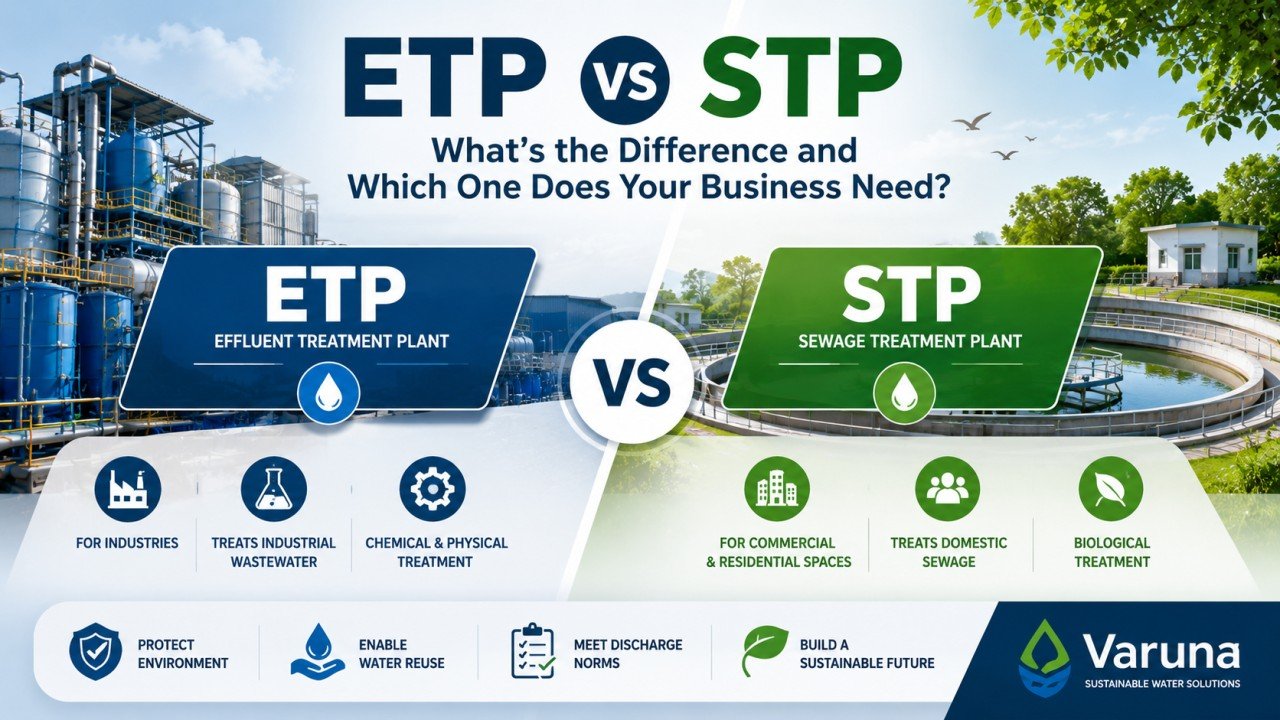
Domestic sewage from hostels is significantly different from chemical discharge produced in laboratories. Because of this variation, properly designed STP & ETP for Medical Colleges in Bangalore must integrate dual treatment strategies.
Generic sizing or hospital-only design approaches often fail to account for campus-scale discharge. Engineering firms like Varuna, experienced in academic healthcare infrastructure, approach design through detailed campus wastewater audits to prevent compliance gaps.
Wastewater Sources Unique to Medical College Campuses
Unlike standalone hospitals, medical colleges combine education, research, and residential operations.
-
Laboratory & Research Effluent
Research blocks often produce chemical-heavy discharge. This requires controlled treatment through a properly configured Effluent Treatment Plant (ETP) before integration into broader campus discharge systems.
-
Anatomy & Pathology Units
Cleaning and specimen-handling processes generate wastewater that must be carefully managed.
-
Hostel & Residential Sewage
Large student populations significantly increase domestic discharge load, directly influencing the design of the Sewage Treatment Plant (STP).
-
Teaching Hospital Discharge
The attached hospital contributes healthcare-related wastewater that must be managed alongside academic effluent.
Designing STP & ETP systems in Bangalore medical colleges without segregating these streams can result in operational instability.
KSPCB Standards for Medical Colleges in 2026
All medical colleges in Bangalore must comply with guidelines issued by KSPCB.
Institutions are required to:
- Obtain Consent to Establish (CTE) prior to installation
- Secure Consent to Operate (CTO) before commissioning
- Maintain monitoring logs and discharge records
- Ensure compliance with permissible discharge limits
In 2026, inspections are increasingly documentation-focused. Authorities review maintenance history, sludge management practices, and load-handling stability.
Medical institutions planning expansion in Bangalore must ensure their wastewater infrastructure aligns with updated KSPCB compliance standards. Varuna assists colleges by aligning plant design and documentation processes with these regulatory expectations.
Capacity Planning for Large Medical Campuses
Planning STP & ETP for Medical Colleges in Bangalore goes beyond bed strength.
Capacity evaluation must include:
- Total enrolled student population
- Hostel occupancy
- Research department size
- Laboratory discharge intensity
- Teaching hospital capacity
- Future infrastructure expansion
Medical colleges often require higher KLD capacities than conventional hospitals due to combined residential and healthcare discharge.
Structured capacity assessment — such as the technical audits conducted by Varuna — helps institutions avoid undersized systems that may later fail compliance inspections.
Approval Process for Medical College Wastewater Systems
The approval process in Bangalore typically includes:
- Comprehensive wastewater study
- Segregation planning for lab and domestic discharge
- Submission of design proposal to KSPCB
- Consent to Establish approval
- Installation and commissioning
- Consent to Operate clearance
Incomplete documentation or incorrect discharge classification often causes delays.
By providing technical documentation and approval guidance, Varuna ensures that medical colleges navigate the KSPCB approval process efficiently.
Compliance Challenges in Academic Institutions
Medical colleges in Bangalore frequently face:
- Campus expansion without STP capacity upgrades
- Increased research output affecting ETP load
- Space constraints in urban campuses
- Seasonal fluctuations in hostel occupancy
- Limited in-house wastewater expertise
Installing STP & ETP for Medical Colleges in Bangalore is only the foundation. Long-term compliance depends on preventive maintenance, operational monitoring, and periodic reassessment.
Through structured O&M support, Varuna helps institutions maintain stable and audit-ready wastewater systems.
Sustainable & Modular Wastewater Solutions (2026 Outlook)
In 2026, sustainability is increasingly integrated into institutional planning.
Medical colleges in Bangalore are adopting:
- Modular STP systems for campus flexibility
- Dedicated ETP units for research blocks
- Real-time monitoring systems
- Water reuse strategies for landscaping
- Energy-efficient aeration technologies
Well-planned medical campus wastewater treatment systems reduce freshwater dependency and align with ESG goals.
Varuna integrates compliance, sustainability, and scalability into wastewater solutions tailored specifically for academic healthcare campuses.
The Role of Varuna in Medical College Compliance
Designing and implementing STP & ETP for Medical Colleges in Bangalore requires expertise in both healthcare and campus-scale infrastructure planning.
Varuna supports medical colleges with:
- Detailed wastewater audits
- Customized STP & ETP design
- KSPCB compliance documentation
- Modular system integration
- Long-term operational strategy
By aligning engineering precision with regulatory standards, Varuna helps medical colleges in Bangalore maintain scalable, compliant, and future-ready wastewater infrastructure.
Conclusion: Responsible Academic Infrastructure
Medical colleges shape future healthcare professionals. Their infrastructure must reflect responsibility beyond classrooms and hospital wards.
In 2026, environmental compliance in Bangalore is stricter and more performance-oriented. Installing properly designed STP & ETP for Medical Colleges in Bangalore ensures:
- Regulatory alignment
- Environmental protection
- Sustainable campus operations
- Institutional credibility
With structured planning and compliance-driven execution from experienced partners like Varuna, medical colleges can build wastewater systems that support academic excellence and environmental responsibility.
FAQs
1. Is STP mandatory for medical colleges in Bangalore?
Yes, medical colleges must comply with KSPCB norms and install appropriate sewage treatment systems.
2. Why are separate STP and ETP systems required?
Because hostel sewage and laboratory effluent require different treatment processes.
3. Does research activity affect ETP design?
Yes, research laboratories significantly influence effluent load and treatment design.
4. What approvals are required from KSPCB?
Consent to Establish and Consent to Operate are mandatory.
5. How is capacity calculated for a medical college campus?
It depends on student population, hostel occupancy, hospital beds, and laboratory discharge.
6. Can treated water be reused on campus?
Yes, treated water can be reused for landscaping and non-potable applications.
7. How does Varuna support medical college compliance?
Varuna provides technical audits, system design, documentation assistance, and regulatory alignment support.